Engineering-Led Movement Of Heavy-Lift And Oversized Cargo
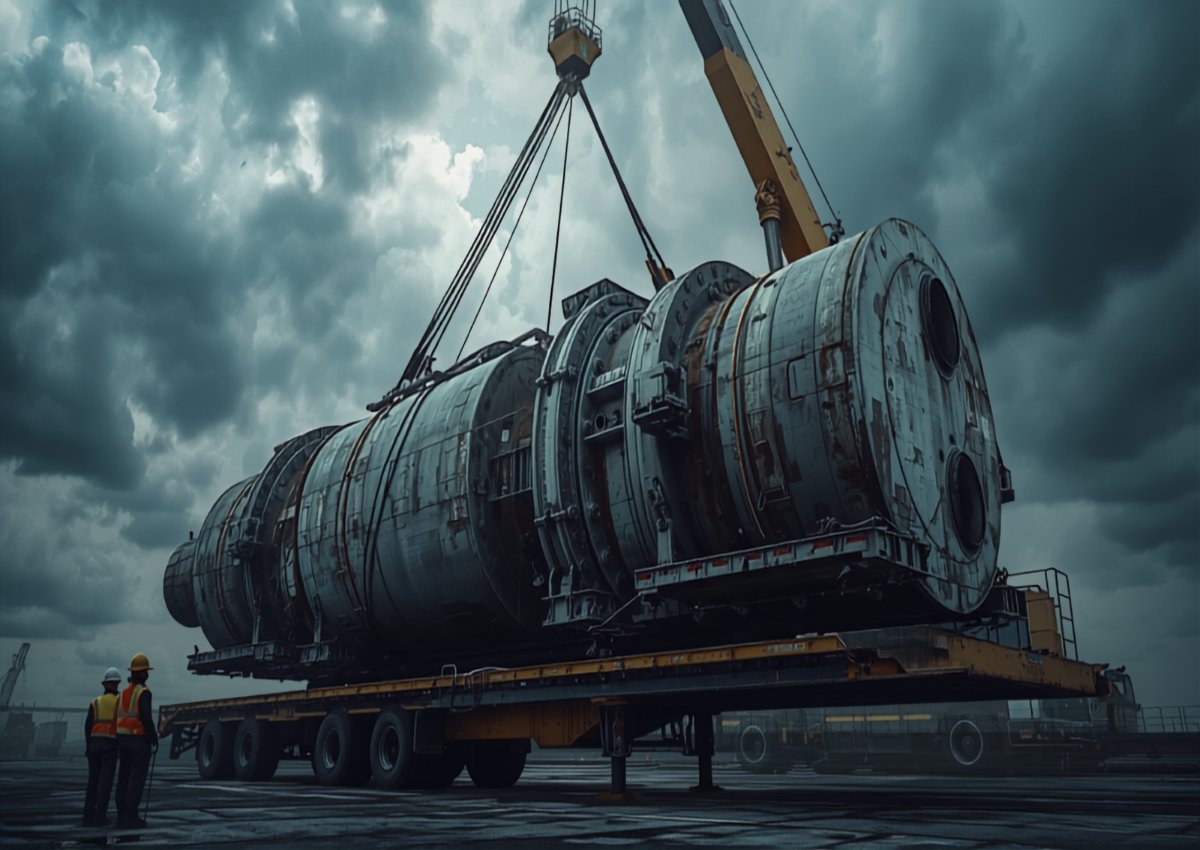
Some cargo simply does not fit inside a standard container or onto a standard trailer. Turbines, transformers, structural steel sections, pressure vessels, reactor columns, cranes and full production-line equipment all fall outside conventional freight handling, and moving them safely takes more than booking capacity — it takes planning. MTLS operates a dedicated project cargo desk that manages breakbulk and heavy-lift shipments for industrial, infrastructure and manufacturing clients, coordinating everything from initial route feasibility through final site offloading. We define project cargo broadly: any consignment that exceeds standard trailer dimensions, requires axle-load calculations beyond normal road limits, needs multiple lifting points, or simply cannot be broken down into smaller units without compromising the equipment itself qualifies for our project desk rather than our standard road freight desk.
Every project cargo movement we handle begins on paper, long before a truck or crane is mobilised. Our team studies the cargo's dimensions and weight distribution, walks the intended route to identify bridges, culverts, overhead power lines, roundabouts and tight turns, and lines up the specialised equipment and permits the move will actually require. This engineering-first approach is what keeps oversized shipments moving on schedule instead of getting stuck at a low bridge three states away from the point of origin. A route survey is never treated as a formality on our desk — it is conducted physically, on the ground, by someone who understands both the cargo's engineering limits and the realities of Indian road infrastructure, from village bypasses to national highway toll plazas.
The equipment side of a heavy-lift move matters just as much as the paperwork. Depending on the cargo profile, our project team sources and schedules hydraulic axle trailers that can be configured to spread extreme point loads, low-bed and extendable flatbed trailers for long structural sections, mobile and crawler cranes for lifting at origin and destination, and, where the route calls for it, barge or rail wagons to cover a leg that road transport cannot handle economically or safely. None of this equipment sits idle in our own yard waiting to be used — it is sourced against the specific job, inspected for suitability, and scheduled to arrive exactly when the survey plan says it should, so the cargo never waits longer than necessary at a loading point.
Permit coordination is frequently the part of a heavy-lift move that clients underestimate. An oversized load crossing two or three state borders can require separate transport permits, separate route clearances and separate escort arrangements from each jurisdiction it passes through, each with its own documentation format and processing timeline. Our project cargo desk manages this centrally, filing with the relevant state and district transport authorities well ahead of mobilisation and tracking approvals so that a shipment is never left waiting at a state border for paperwork that should have been cleared weeks earlier.
Key Benefits Of Shipping Project Cargo With MTLS
- Engineering route surveys conducted before mobilisation to confirm bridge and culvert load-bearing capacity, overhead clearances, road camber and turning radii along the full route, so the transport plan is built on measured facts rather than assumptions.
- Access to specialised heavy-lift equipment including flatbed and low-bed trailers, hydraulic axle modules that can be reconfigured for different load spreads, multi-axle modular trailers and mobile or crawler cranes sourced against each job's specific weight and dimension profile.
- Multi-modal project coordination combining road, rail and ocean legs into a single planned movement where the route demands it, so cargo that cannot travel by road for its entire journey still reaches site as one coordinated shipment rather than a series of disconnected handoffs.
- Permit and escort management handled directly with state and district transport authorities, including pilot vehicle arrangements and police escorts where oversized dimensions require them, so loads move with proper clearance at every border crossed.
- A dedicated project manager assigned to complex moves, acting as a single point of contact from initial survey through permit filing, equipment mobilisation and final site delivery, with regular status updates so you always know exactly where your shipment stands.
Features Of Our Project Cargo Service
Heavy-Lift & Breakbulk Handling
Specialised handling for cargo that exceeds standard weight and dimension limits, including lift-plan calculations, rigging and slinging arrangements for the actual weight and centre of gravity of the piece being moved.Route Survey & Permits
On-ground route assessment paired with the necessary statutory approvals, covering every state and district the shipment will pass through rather than only the origin and destination points.Specialized Equipment Coordination
Flatbeds, hydraulic trailers, modular axle combinations and cranes sourced and scheduled around your cargo's exact dimensions, weight and lifting requirements rather than whatever happens to be available.Multi-Vendor Project Management
One coordinating team across transporters, crane operators, escort providers and site contractors, so responsibility for the overall schedule never gets lost between multiple subcontractors.Industries That Rely On Our Project Cargo Desk
Heavy engineering companies moving fabricated structural assemblies, boilers, kiln sections and pressure vessels turn to our project desk because these pieces are typically one-off fabrications that cannot be replaced quickly if damaged in transit, which makes correct handling and route planning non-negotiable. Power and infrastructure project developers transporting transformers, generator sets and wind turbine components work under commissioning deadlines set months in advance, and a single missed delivery window on a substation or plant project can cascade into significant cost overruns across the entire site programme. Our project managers coordinate closely with site engineering teams on these projects so that transport schedules stay aligned with civil and electrical work happening in parallel.
Industrial plants relocating entire production lines rely on us to sequence dozens of individual machine moves so that the receiving facility can be reassembled and commissioned in the right order, rather than receiving equipment in a sequence that leaves half the floor idle waiting for one late component. Construction equipment manufacturers and dealers shipping cranes, excavators, piling rigs and other earthmoving machinery also depend on our heavy-lift capability, particularly for cross-country deliveries where the machine itself is oversized even before any load is placed on it. Across all of these sectors, our clients work to fixed installation or commissioning windows, which means our planning has to be precise enough that the cargo arrives exactly when the site is ready to receive it — not a week early with nowhere to store it, and never a week late.
Our Project Cargo Process
We run every heavy-lift shipment through the same four-stage discipline, regardless of the cargo's size or the client's industry. The stages below are not a marketing sequence — they reflect the actual order in which decisions have to be made, because getting the sequence wrong (booking transport before the route is confirmed, for example) is exactly how project cargo shipments end up delayed or damaged.
Route Survey & Feasibility
Permit & Escort Arrangement
Specialized Transport Execution
Site Delivery & Offloading
The process begins with the route survey and feasibility stage, where our team physically inspects the intended route, measures clearances and confirms that the cargo can actually reach the site by the proposed path, adjusting the route or recommending an alternative loading configuration if it cannot. Once feasibility is confirmed, our team files for the required transport permits and arranges pilot escort vehicles where oversized dimensions call for them, working directly with each state and district authority the route passes through so approvals are in hand before the equipment is mobilised. The move itself is then executed on the pre-surveyed route with the appropriate trailer or trailer combination, tracked stage by stage so that our project manager and the client both know the cargo's location at every point of the journey rather than only at the start and end. On arrival, we coordinate crane or hydraulic-jack offloading directly at the client's site, working around their installation schedule rather than a generic delivery window, and remaining on site until the cargo is safely positioned exactly where the client's engineering team needs it.
Planning A Heavy-Lift Move
Clients approaching us for the first time often ask how early they should start planning a heavy-lift shipment, and the honest answer is: as soon as the cargo's approximate dimensions and weight are known, even before a final delivery date is fixed. Early engagement lets our project desk run a preliminary route feasibility check, flag any dimension or weight thresholds that will trigger additional permits, and identify equipment that may need to be booked well in advance in regions where hydraulic trailers or heavy cranes are in limited local supply.
We also encourage clients to share drawings or technical specifications rather than only overall dimensions, because details like the position of lifting lugs, the cargo's centre of gravity, and any handling restrictions printed on the equipment itself materially change how a route survey and lift plan are built. The more accurate the information we start with, the fewer surprises there are once the cargo is already in motion — and with project cargo, surprises are the single biggest driver of cost and schedule overruns.
Why Choose MTLS For Project Cargo
Project cargo has almost no tolerance for improvisation — a route that hasn't been checked, a permit that hasn't been filed, or equipment booked a day too late can stall a shipment for weeks and put an entire installation schedule at risk. Our approach is built around planning discipline: every move is surveyed, documented and resourced before it starts, not figured out along the way. That discipline is what has kept our project cargo track record free of the kind of delays that come from avoidable planning gaps, and it's the standard our project managers hold themselves to on every heavy-lift job, large or small.
Just as importantly, we treat every project cargo shipment as a partnership with the client's own engineering and site teams rather than a transaction handed off once the truck leaves the yard. Our project managers stay reachable throughout the move, communicate proactively if conditions on the ground change — a permit delay, a weather-affected route, a site readiness slip — and adjust the plan in coordination with the client rather than leaving them to find out after the fact. For a Jaipur-headquartered team with route experience across India's national highway network, that combination of technical planning and hands-on communication is what has made project cargo one of our most repeat-booked services among industrial and infrastructure clients.
Frequently Asked Questions
Gallery