Cost-Efficient Rail Movement For High-Volume Cargo
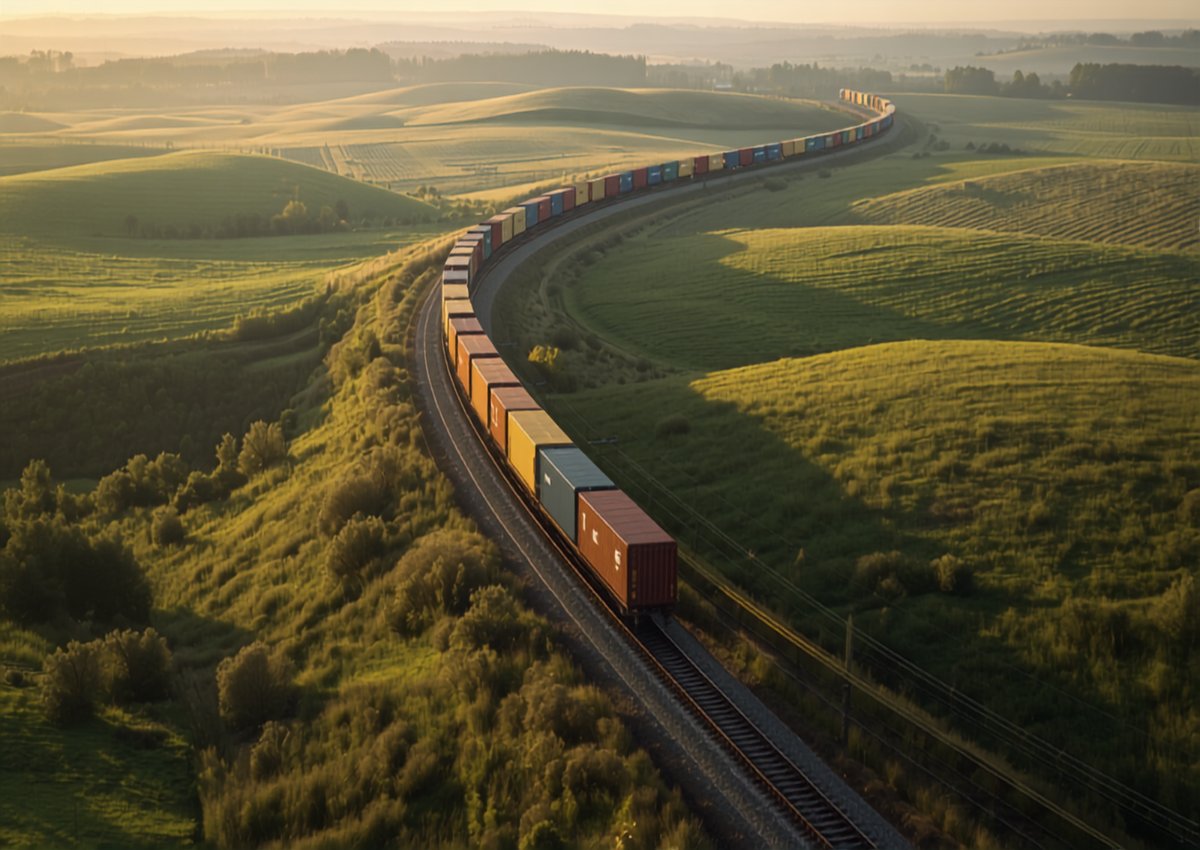
When cargo volume is large and the route is long, rail is often the most economical way to move it. MTLS's rail freight service is built around exactly that scenario — bulk and containerised consignments that need to travel significant distances across India at a lower cost per tonne than road transport can typically offer. Operating out of Jaipur, we're well positioned to connect Rajasthan's inland industrial belt — stone quarries, mineral processing units, engineering plants and manufacturing clusters — to the major ports and consumption centres that their goods are ultimately headed to or coming from.
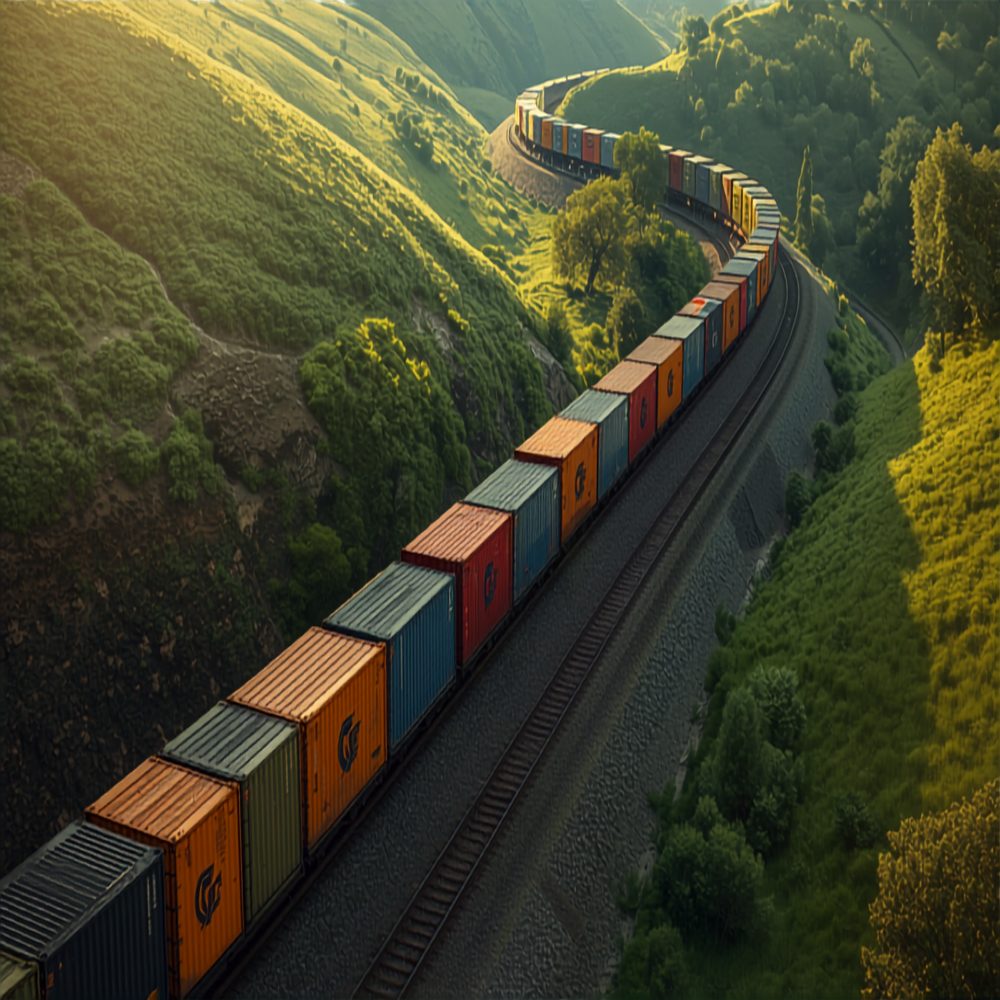
The economics of rail become clearer the moment volume and distance increase together. A single rake can carry the equivalent of dozens of truckloads in one scheduled movement, which is precisely why rail pulls ahead of road on a per-tonne basis once a shipment is large enough and the haul is long enough — typically several hundred kilometres or more. Below that threshold, or where a consignment is small, urgent or time-sensitive, road transport usually remains the more sensible choice, and part of our job at the planning stage is helping clients honestly assess which mode actually suits their specific volume and route rather than defaulting to one or the other out of habit.
Rajasthan's position in the rail network is a genuine advantage for exporters and manufacturers based here. Inland container depots and rail sidings across the state give containerised cargo a direct, scheduled link to gateway ports such as Mundra, Pipavav and Nhava Sheva, without the exporter having to route everything through congested highway corridors. For bulk commodities that don't move in containers at all — dressed stone, marble blocks, mineral ore, cement clinker and similar heavy, low-value-density cargo — open and covered wagon loading at the origin siding offers a more practical and considerably cheaper alternative to stacking the same tonnage onto a fleet of trucks. Choosing between containerised rail and bulk wagon movement is one of the first decisions our rail freight desk works through with a client, because the two options suit different cargo profiles and pricing structures.
Rail freight isn't a replacement for road transport; it's a complement to it. Very few shipments start and end at a railway siding, which is why our rail bookings are almost always planned as part of a combined rail-road solution: road for the first and last mile, rail for the long, high-volume middle stretch. This combination keeps overall freight cost down without sacrificing the door-to-door coverage that most of our clients actually need, and it takes pressure off national highway congestion for cargo that doesn't need to move at road speed. In practice this means a truck collects cargo from the factory or quarry, moves it to the nearest ICD or siding, the rail leg covers the long middle distance at a fraction of the road cost, and a second road leg completes delivery to the final consignee or port terminal — all coordinated by a single point of contact rather than left for the client to stitch together themselves.
Key Benefits Of Rail Freight With MTLS
- Lower per-tonne cost for bulk and long-haul cargo compared to equivalent road movement — the savings widen further as volume and distance increase, which is why rail is especially attractive for repeat, high-tonnage export or dispatch programmes rather than one-off small shipments.
- Reduced dependency on road congestion, keeping transit timelines more predictable over long distances since a rail movement isn't exposed to the same highway bottlenecks, toll queues and driver rest-hour constraints that can add unplanned hours to a long road haul.
- Reliable, scheduled service built around rake and wagon availability planned well in advance, so your dispatch window and destination handling can be confirmed before cargo is even loaded rather than arranged reactively once goods are ready to move.
- Well suited to heavy and bulk industrial cargo, including Rajasthan's stone, marble and mineral exports, cement and clinker, and oversized engineering components that would otherwise require multiple truck movements and repeated loading handling.
- Combined rail-road solutions that extend rail's cost advantage all the way to your factory or warehouse door, so you get the economics of bulk rail movement without giving up the door-to-door convenience of a fully managed freight service.
Features Of Our Rail Freight Service
Containerised Rail Freight
Standard containers moved by rail for secure, weatherproof long-haul transit, keeping cargo sealed from origin loading right through to destination handover with minimal intermediate handling.Bulk Wagon Loading
Open and covered wagon options for bulk minerals, stone and industrial commodities, sized and selected to match the cargo's density, weight and exposure sensitivity for the route.ICD-To-Port Rail Linkages
Dedicated rail connections between inland container depots and gateway ports, giving Rajasthan-based shippers a direct scheduled route to coastal terminals without relying solely on the highway network.Rail-Road Combination Planning
First and last-mile road legs coordinated around the rail schedule for full door coverage, so the handover between modes is planned in advance rather than causing delay at either end.Industries That Rely On Our Rail Freight Desk
Rajasthan's stone, marble and mineral exporters make up a significant share of our rail freight volume, given how well bulk wagon loading suits their tonnage and how much cost it saves over long road hauls to port. Dressed stone and marble blocks are dense, heavy and largely indifferent to weather exposure during transit, which makes them ideal candidates for open or covered wagon movement rather than containerisation, and the sheer scale of Rajasthan's quarrying and mineral processing output means these shippers benefit most directly from rail's per-tonne cost advantage on the long haul to ports such as Mundra and Pipavav. We work closely with quarry operators and processing units to plan wagon bookings around their production and dispatch cycles, so cargo doesn't sit waiting at the siding for the next available rake.
Cement and building materials producers are another major user group, particularly where clinker, cement bags or bulk aggregate need to move in volumes that would otherwise require dozens of individual truck trips. Heavy engineering manufacturers moving large, weighty components — machinery bases, structural steel, industrial equipment — also turn to rail freight regularly when a component's size or weight makes road transport impractical or disproportionately expensive over long distances. Bulk agricultural commodity traders round out our regular rail client base, moving grain, oilseed and similar commodities in wagon-load quantities on routes where road transit would otherwise mean multiple truck movements, more handling touchpoints and a higher landed cost per tonne.
Our Rail Freight Process
Moving cargo by rail involves more upfront coordination than a straightforward road booking, simply because rakes and wagons have to be secured against a schedule rather than dispatched on demand. Our process is built to absorb that coordination on your behalf, so from your side a rail booking should feel no more complicated than any other freight movement we handle — you confirm volume, origin and destination, and we manage everything from rake allocation through to the final road delivery.
Route & Rake Planning
Loading At Origin ICD/Siding
Rail Transit Monitoring
Destination Handling & Onward Delivery
We start by working out the most cost-effective route and confirming rake or wagon availability against your required dispatch window, factoring in whether containerised or bulk wagon movement is the better fit for the cargo in question. Cargo is loaded at the origin inland container depot or private siding under proper documentation, with weight, count and condition recorded before the wagons move, so there's a clear record to refer back to at destination. Once loaded, the shipment is tracked through its rail transit so we can flag any schedule changes early and keep you and your consignee updated rather than leaving anyone to find out about a delay only when the cargo fails to arrive on time. On arrival, our team manages destination handling — unloading, documentation and any customs or terminal formalities where relevant — and arranges onward road delivery to your final consignee, keeping the handover as seamless as the rest of the journey and closing the loop on a movement that started days or weeks earlier at the origin siding.
Why Choose MTLS For Rail Freight
Rail freight only delivers on its cost advantage if the planning around it is tight — the wrong rake booking or a missed loading window can erase the savings rail is supposed to provide, and a bulk consignment that sits idle at a siding waiting for the next available wagon quickly loses whatever it saved on the per-tonne rate. Our team plans rail bookings with the same attention we give faster, higher-cost modes, because a bulk shipment that arrives late is just as disruptive to a client's production schedule or export commitment as an air shipment that misses its flight. That means confirming rake availability early, keeping documentation ready ahead of the loading window, and staying in contact with you throughout transit rather than only when there's a problem to report.
Combined with our own road transport fleet for first and last-mile legs, we're able to offer rail freight as a genuinely complete solution rather than a single leg you have to coordinate yourself. That matters because very few clients actually want to manage a rail booking, a separate road pickup and a separate road delivery as three disconnected arrangements with three different points of contact — they want the cargo to leave origin and arrive at destination, with everything in between handled on their behalf. Our rail freight desk works alongside our road transport, warehousing and customs teams so that a bulk or containerised rail movement fits naturally into a wider freight plan rather than sitting apart from it, whether that plan involves staging cargo before loading, storing it briefly on arrival, or clearing it through customs en route to a port.
Rail Vs Road: Making The Right Call
Clients often ask us to simply pick the better mode for them, and while there's no single rule that applies to every shipment, a few factors consistently tip the decision one way or the other. Volume and distance are the two biggest — as a rough guide, the larger the tonnage and the longer the haul, the more rail's per-tonne pricing advantage outweighs its longer transit time and reduced routing flexibility. A shipment of a few tonnes moving within Rajasthan or to a neighbouring state is almost always better served by road transport, which can move door to door without the loading, transhipment and destination handling steps that rail requires.
Time sensitivity matters just as much as volume. If a consignment has a hard delivery deadline, or if production downstream depends on it arriving within a tight window, the greater schedule certainty of a dedicated road movement often justifies its higher cost. Rail suits cargo where cost per tonne is the primary constraint and the delivery window has some flexibility built in — bulk exports moving to a vessel booking a few weeks out, for instance, rather than a component needed on a factory floor tomorrow morning. Cargo type is the third consideration: dense, weather-tolerant bulk commodities like stone, ore and cement are naturally suited to wagon loading, while higher-value, damage-sensitive or irregularly shaped cargo generally does better in a container or on a dedicated truck where handling can be more tightly controlled. Rather than asking you to make this call unassisted, our rail freight desk will look at your actual volume, route, deadline and cargo type and recommend whichever mode — or combination of the two — genuinely works out better for that specific shipment.
Frequently Asked Questions
Gallery